
Analysis of the relationship between language, identity, and political history in Eritrea.
If language is turned into a political weapon, history is often the first casualty. The current attempt by the Tigrygna Ethno Nationalists to frame Tigrinya as a tool to claim Eritrea is doing exactly that.
Tigrinya Ethno-Nationalism comprises ideologies centered on Tigrinya-speaking peoples in Eritrea and Ethiopia, often emphasizing shared ancestry, Orthodox Christian heritage, and the Tigrinya language.
Yesterday, when King Charles III told Donald Trump, “If it wasn’t for us, you’d be speaking French,” it sounded like a light diplomatic exchange. But it reflected a deeper reality: what people speak is shaped by history, and history itself is shaped by power.
Trump’s claim that without the United States Europe would be speaking German, and the King’s reply, are not really about language. They are about who shaped outcomes, who prevailed, and who set the direction.
And that same logic—without the humor—is now playing out inside Eritrean discourse, where the stakes are not symbolic, but existential. An Eritrean activist, Adem Omer, once put it plainly: If the Unionists—majority of them Tigrinya speakers—had prevailed fully, Tigrinya itself might have become a bygone, replaced by Amharic as the Eritrean national language.
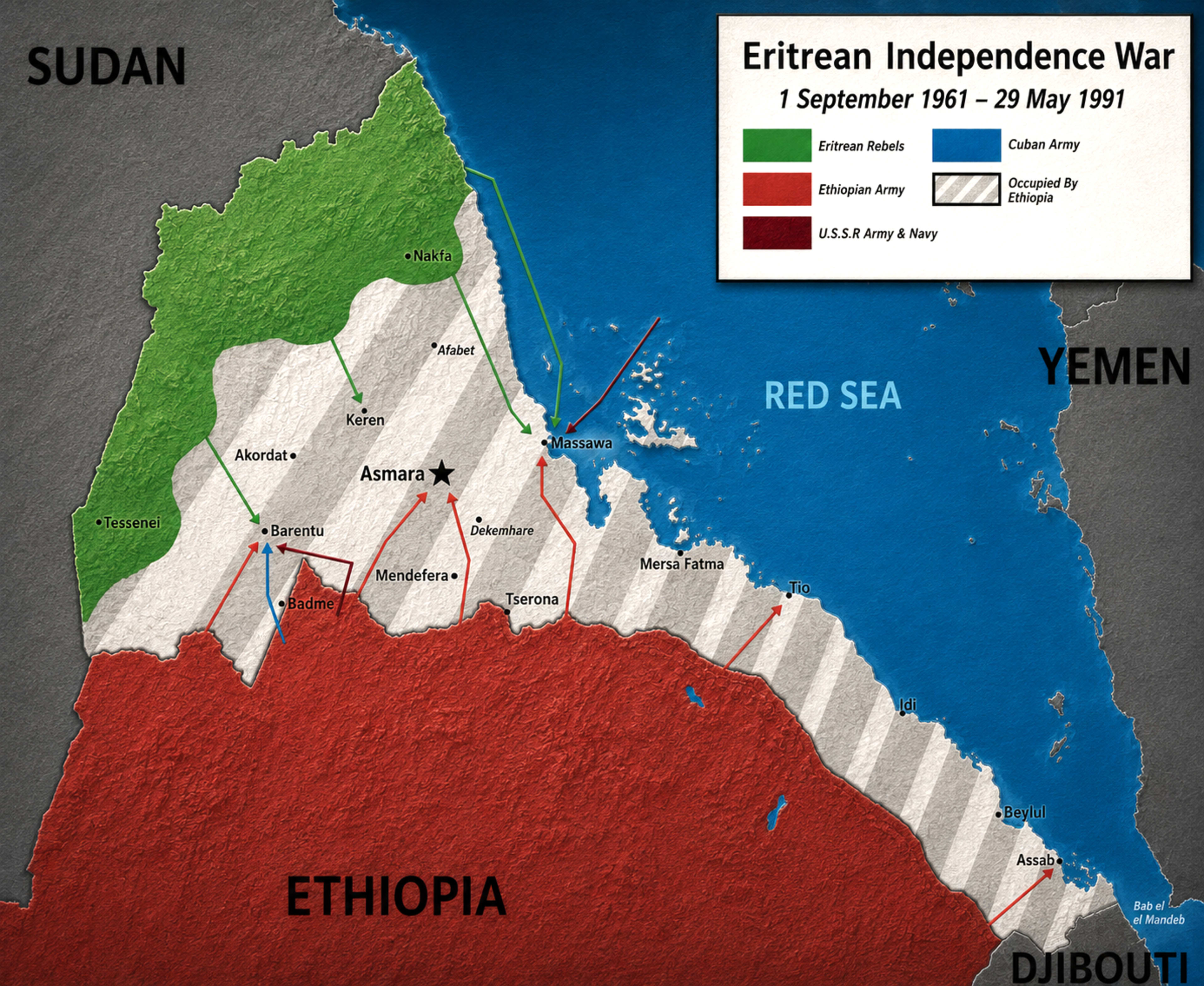
Another activist, Seid Tewekel, extended the argument beyond language: If it were up to the Unionists, the Eritrean highlands could have ended up absorbed into the landlocked Ethiopia. It is the independence movement that anchored the highland to the Eritrean Red Sea.
These are not comfortable statements. But they are not random either. They are counterfactuals meant to force a confrontation with reality: What exists today was not inevitable. It was defended.
Tigrinya did not retain its place in Eritrea by historical accident. Nor did Eritrea’s geography remain intact by default. Both were shaped by a political struggle—often against trajectories that would have produced very different outcomes. And that is precisely why the current moment demands clarity.
There is today a rising current of ethno-nationalist discourse claiming to speak on behalf of “Eritrean Tigrinya.” It presents itself as the guardian of identity, the protector of language, and the voice of a people under threat. But in doing so, it has crossed into something more troubling.
It is now targeting independentists and the descendants—casting them as conspirators against the very Tigrinya identity that the independence struggle helped preserve.
This is not just political disagreement. It is a historical inversion. Because you cannot claim to defend Tigrinya identity today while ignoring—or benefiting from—a history that undermined it.
And you certainly cannot accuse others of betraying that identity while standing on foundations they helped secure. This is not about sanctifying any political generation. The independence era, like all historical periods, was complex and imperfect. But it is about recognizing a basic truth: Cause and effect still matter.
Language in Eritrea has always been tied to power. Power shaped policy. Policy shaped language. To pretend otherwise is not analysis—it is narrative construction.
The irony of the current Tigryna ethno-nationalist posture is that it isolates Tigrinya from the very historical struggle that allowed it to survive as a public, institutional, and national language.
It turns a shared outcome into an exclusive claim. It reframes inheritance as ownership. That is not defense. That is appropriation.
The question is therefore not what we would be speaking if history had gone another way. The real question is whether we are willing to speak honestly about the way it actually did.
Support Eri Meeting Point
Keep independent media alive